
Story Behind Mini-Circuits’ 1st GaN MMIC Power Amplifiers
Fri, 16 Oct 2026 13:59:32 | Amplifiers
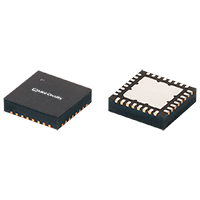
Mini-Circuits is expanding its MMIC power amplifier portfolio by introducing its first GaN MMIC power amplifiers, delivering broadband frequency coverage and high power for demanding RF applications. In this special Frequency Matters interview with Microwave Journal, Michael Ciardullo, VP of MMIC Engineering, and Randy Cochran, Director of MMIC Product Management at Mini-Circuits, discuss the technology behind these new devices, their key performance advantages, and what this latest development means for RF designers.
Find more amplifiers at: https://www.minicircuits.com/WebStore/Amplifiers_MMIC.html?interface=SMT&interface=Die
The post Story Behind Mini-Circuits’ 1st GaN MMIC Power Amplifiers first appeared on Mini-Circuits Blog.

Application Note: Utilizing the TSS-63ULN+ MMIC LNA
Wed, 14 Oct 2026 15:55:48 | Amplifiers
The TSS-63ULN+ is an ultra-low NF MMIC LNA that operates over the 1000 to 6000 MHz frequency range. A series of three designs, 3.7-4.2 GHz, 4.2-5.0 GHz, and 4.9-5.9 GHz are presented in the following application notes to support users’ design efforts. These publications detail ideal application circuits to the component level and show optimized performance for each use case.
The post Application Note: Utilizing the TSS-63ULN+ MMIC LNA first appeared on Mini-Circuits Blog.

Introduction to Mini-Bench: New GUI Measurement Platform
Mon, 12 Oct 2026 19:35:39 | Power Sensors
Mini-Bench is a powerful new measurement platform, providing a dynamic user interface for Mini-Circuits’ PWR series high-performance power sensor series, designed to simplify test setups, improve workflow efficiency, and enhance the overall user experience for engineers and technicians.
The software introduces a modern, intuitive design that enables users to configure measurements faster, access critical functions more easily, and gain deeper insight into test results. Developed based on customer feedback and real-world application requirements, the interface streamlines common tasks while maintaining access to the advanced capabilities users expect from Mini-Circuit's test solutions.
Download here: https://www.minicircuits.com/WebStore/softwaredownload/power-meters-downloads-and-documentation.
The post Introduction to Mini-Bench: New GUI Measurement Platform first appeared on Mini-Circuits Blog.

Mini-Circuits Butler Matrices Enable Repeatable 5G and Wi-Fi MIMO Beamforming and Multipath Testing
Mon, 05 Oct 2026 10:00:00 | 90- and 180-Degree Hybrids
Mini-Circuits has released a family of high-performance Butler matrices, designed to help engineers reproduce controlled RF phase relationships and multipath propagation conditions in laboratory and production test environments. Covering key Wi-Fi and 5G FR1 frequency bands, the five models provide bi-directional signal transfer between all inputs and outputs while maintaining controlled phase relationships, amplitude balance, […]
The post Mini-Circuits Butler Matrices Enable Repeatable 5G and Wi-Fi MIMO Beamforming and Multipath Testing first appeared on Mini-Circuits Blog.

GaN Balanced Amplifier Design Spans a 6.6:1 Bandwidth
Mon, 28 Sep 2026 16:39:46 | Amplifiers
The very first commercially viable GaN devices from Japan began hitting the shores of the USA in 2004. After more than 22 years, GaN devices continue to drive new SWaP-C metrics for RF, microwave and millimeter wave transmission equipment. GaN amplifiers are a mainstay in many commercial and defense applications and take on many forms such as highly integrated monolithic microwave integrated circuits (MMICs), multi-chip modules (MCMs), Systems-in-Packages (SIPs), and chip-and-wire hybrid modules (Hybrids).
The post GaN Balanced Amplifier Design Spans a 6.6:1 Bandwidth first appeared on Mini-Circuits Blog.

RF CMOS Breakthroughs: Jim Cable on Peregrine, Murata, & the CMOS Switch Revolution
Wed, 05 Aug 2026 17:59:57 | Industry Insights
In the premiere episode of Above the Noise, host Pat interviews Jim Cable, the semiconductor leader behind Peregrine’s RF CMOS breakthroughs. Jim recounts developing silicon-on-sapphire and SOI switches, winning major customers like Murata, and guiding Peregrine through product scaling and acquisition.
They discuss the technical challenges and market strategies that displaced GaAs switches, lessons for startups about disruptive innovation and timing, and Jim’s ongoing advisory work in GaN on silicon, CMOS power amplifiers, quantum, and advanced packaging.
Above the Noise is a Mini-Circuits podcast series. Find out more about Mini-Circuits at www.minicircuits.com.
The post RF CMOS Breakthroughs: Jim Cable on Peregrine, Murata, & the CMOS Switch Revolution first appeared on Mini-Circuits Blog.

Via Satellite Interview with Jin Bains at SATShow 2026
Wed, 25 Mar 2026 12:52:16 | Industry Insights
At SATShow Week 2026, Mini-Circuits' CEO Jin Bains spoke with Rachel Jewett from Via Satellite about the space and Satcom market for RF and microwave products. Their conversation highlights how Mini-Circuits supports the expanding range of space and satellite applications with Mini-Circuits' program for space upscreening and launch preparation.
The post Via Satellite Interview with Jin Bains at SATShow 2026 first appeared on Mini-Circuits Blog.

The Anti-Parallel Series Pair Limiter Topology
Tue, 24 Mar 2026 16:53:47 | Engineering Resources
For more than 6 decades PIN diode limiters have served to enhance the robustness of RF receivers. The anti-parallel configuration is a very popular choice because its insertion loss, recovery time, power handling, flat leakage and frequency response characteristics can be traded off readily by choice of PIN diode. Even increasing the number of PIN diodes utilized in a limiter circuit can affect performance whether they are added in series or in subsequent stages altogether.
The post The Anti-Parallel Series Pair Limiter Topology first appeared on Mini-Circuits Blog.

Joseph Merenda Named Mini-Circuits’ Inaugural R&D Fellow
Tue, 02 Dec 2025 20:39:34 | Industry Insights
Mini-Circuits is proud to announce the appointment of Joseph Merenda as the company’s first Research & Development Fellow, marking a significant milestone in the organization’s long-term commitment to engineering excellence and technical innovation.
The post Joseph Merenda Named Mini-Circuits’ Inaugural R&D Fellow first appeared on Mini-Circuits Blog.

Interview: Mini-Circuits Enters Automotive Market with uCeramIQ LTCC Products
Wed, 29 Oct 2025 20:27:20 | Industry Insights
Aaron Vaisman, uCeramIQ Business Unit Leader at Mini-Circuits, and Justin Boyle, Global Market Manager, T&M, Quantum and Automotive at Mini-Circuits recently spoke with our friend, Pat Hindle from Microwave Journal about the company’s entry into the market for automotive electronics and connectivity, its line of AEC-Q200 qualified uCeramIQ LTCC solutions, and the wide variety of […]
The post Interview: Mini-Circuits Enters Automotive Market with uCeramIQ LTCC Products first appeared on Mini-Circuits Blog.

The Beginning of a New Chapter: Melville Office Grand Opening
Mon, 14 Sep 2026 15:02:52 | Events
Mini-Circuits hosted a grand opening ceremony and party for its members, customers, friends and partners. The new Melville location is a big milestone for the company and its continuous growth both for business and in terms of expanding our team. Mini-Circuits now has the ability to tap into the unique talent pool and lucrative technology community that Long Island has to offer.
The post The Beginning of a New Chapter: Melville Office Grand Opening first appeared on Mini-Circuits Blog.

From Revolutionary to Tragedy: Edwin Howard Armstrong
Tue, 25 Aug 2026 13:46:34 | Mini-Circuits Life
Edwin Howard Armstrong was an American electrical engineer best known for having invented foundational electronic circuits still used in moder radio, radar and television. These inventions include the regenerative circuits, the superheterodyne circuit, and the FM radio. The regenerative circuit was the first amplifying receiver and the first reliable continuous-wave transmitter, while his crowning achievement, the FM radio, revolutionized the way people listened to news and music.
The post From Revolutionary to Tragedy: Edwin Howard Armstrong first appeared on Mini-Circuits Blog.

The Unsung Hero: Life & Legacy of Oliver Heaviside
Wed, 19 Aug 2026 16:13:50 | Mini-Circuits Life
Oliver Heaviside was a British, self-taught mathematician, physicist and electrical engineer who, although made great contributions to both mathematics and telegraphy, flew under the radar and is now eclipsed by other more well-known names such as James Clerk Maxwell. Heaviside created the four vector-form equations that we now know today as Maxwell’s equations, and also formulated the Telegrapher’s Equations, which detail how voltages and currents propagate as waves along a long-distance circuit or transmission line often used for telegraphs in the late 1800s to early 1900s.
The post The Unsung Hero: Life & Legacy of Oliver Heaviside first appeared on Mini-Circuits Blog.

From Theory to Real World Experience: Quintin Hatzis Shares Key Moments from His Internship
Mon, 20 Jul 2026 14:56:20 | Mini-Circuits Life
Breaking into the engineering industry and making your mark is no easy feat. Especially as a part of the up-and-coming generation of young engineers, it can be difficult to decide which field to pursue. Quintin Hatzis, is already blazing his own trail toward a prosperous career in RF engineering after finishing his second internship with Mini-Circuits this summer. Read more on our blog!
The post From Theory to Real World Experience: Quintin Hatzis Shares Key Moments from His Internship first appeared on Mini-Circuits Blog.

Summer Picnic Brings the Spirit of Havana to Mini-Circuits
Mon, 13 Jul 2026 14:47:35 | Mini-Circuits Life
This summer, Mini-Circuits Florida members stepped away from their daily routines and immersed themselves in the vibrant sights, flavors, and traditions of Cuba during our Havana Nights Summer Picnic.
The post Summer Picnic Brings the Spirit of Havana to Mini-Circuits first appeared on Mini-Circuits Blog.

Mini-Circuits Butler Matrices Enable Repeatable 5G and Wi-Fi MIMO Beamforming and Multipath Testing
Mon, 05 Oct 2026 10:00:00 | 90- and 180-Degree Hybrids
Mini-Circuits has released a family of high-performance Butler matrices, designed to help engineers reproduce controlled RF phase relationships and multipath propagation conditions in laboratory and production test environments. Covering key Wi-Fi and 5G FR1 frequency bands, the five models provide bi-directional signal transfer between all inputs and outputs while maintaining controlled phase relationships, amplitude balance, […]
The post Mini-Circuits Butler Matrices Enable Repeatable 5G and Wi-Fi MIMO Beamforming and Multipath Testing first appeared on Mini-Circuits Blog.
Mini-Circuits Introduces Mini-Bench™ RF Measurement Platform for Streamlined Power Sensor Testing
Mon, 28 Sep 2026 16:03:10 | News
Mini-Circuits, a global supplier of RF, microwave and millimeter-wave components and test solutions, will introduce Mini-Bench™, a new RF test and measurement software platform designed to simplify instrument setup, improve workflow efficiency and provide engineers with enhanced tools for measurement visualization and analysis at European Microwave Week 2026, October 6–8 at ExCeL London in Booth […]
The post Mini-Circuits Introduces Mini-Bench™ RF Measurement Platform for Streamlined Power Sensor Testing first appeared on Mini-Circuits Blog.

Mini-Circuits to Showcase Innovative RF and Microwave Solutions at European Microwave Week 2026
Thu, 17 Sep 2026 15:53:16 | News
Mini-Circuits, a global leader in RF, microwave and millimeter-wave components and test products, today announced that it will exhibit at European Microwave Week 2026 in London, United Kingdom. From October 6–8 at ExCeL London, visitors can meet Mini-Circuits’ product experts and discover new technologies for communications, aerospace and defense, satellite, quantum, automotive, industrial, and test […]
The post Mini-Circuits to Showcase Innovative RF and Microwave Solutions at European Microwave Week 2026 first appeared on Mini-Circuits Blog.

Mini-Circuits Launches “Above the Noise” Podcast Featuring Conversations with RF & Microwave Industry Leaders
Tue, 25 Aug 2026 20:00:06 | News
Mini-Circuits, a global leader in RF, microwave and millimeter-wave components and systems, has announced the launch of Above the Noise, a new podcast series featuring conversations with industry leaders from around the world. The series explores RF and microwave technology and business through in-depth discussions with the innovators, entrepreneurs and technical experts who have helped […]
The post Mini-Circuits Launches “Above the Noise” Podcast Featuring Conversations with RF & Microwave Industry Leaders first appeared on Mini-Circuits Blog.

GaN MMIC Power Amplifiers
Fri, 07 Aug 2026 14:08:07 | Amplifiers
Mini-Circuits has powered-up our MMIC product line with broadband-matched GaN MMIC amplifiers that exhibit excellent robustness and efficiency. The GNA series features two innovative models with up to 8W of RF output power and 47% power-added efficiency.
The post GaN MMIC Power Amplifiers first appeared on Mini-Circuits Blog.

5 Benchtop Switch Modules up to 67 GHz
Fri, 14 Aug 2026 15:12:48 | Engineering Resources
Mini-Circuits’ RCMX Series Mechanical Switch Assemblies contains pairs of latching electro-mechanical SPDT to SP8T switches operating over a wide bandwidth from DC up to 67 GHz with high isolation and low insertion loss. Each switch is absorptive / internally terminated with a break-before-make configuration and a typical lifetime of 2 million switching cycles.
The post 5 Benchtop Switch Modules up to 67 GHz first appeared on Mini-Circuits Blog.

GaN MMIC Power Amplifiers
Fri, 07 Aug 2026 14:08:07 | Amplifiers
Mini-Circuits has powered-up our MMIC product line with broadband-matched GaN MMIC amplifiers that exhibit excellent robustness and efficiency. The GNA series features two innovative models with up to 8W of RF output power and 47% power-added efficiency.
The post GaN MMIC Power Amplifiers first appeared on Mini-Circuits Blog.
Low Phase Noise 33 GHz Signal Generator
Fri, 31 Jul 2026 13:08:00 | Engineering Resources
Mini-Circuits' SSG-33GHP-RC is a compact wideband signal generator covering 100 MHz to 33 GHz with up to +23 dBm output power, making it ideal for characterizing millimeter-wave components and systems. It supports CW operation, flexible pulse sequences with pulse widths down to 0.5 µs, and automated frequency and power sweep or hop sequences.
The post Low Phase Noise 33 GHz Signal Generator first appeared on Mini-Circuits Blog.

Application Notes: Band-Optimized Implementations of a MMIC LNA with Shut Down
Sat, 25 Jul 2026 18:46:12 | Amplifiers
An ultra-low NF MMIC LNA, the TSS-23ULN+ is shown to be versatile enough to be designed into the 380-480 MHz, 700-800 MHz and 950-1700 MHz bands of operation. To support users’ product selection and design effort, we have published 3 new application notes detailing the ideal application circuit to optimize performance for each use case.
The post Application Notes: Band-Optimized Implementations of a MMIC LNA with Shut Down first appeared on Mini-Circuits Blog.

Cut PCB Layers with RF Crossovers
Fri, 17 Jul 2026 16:15:57 | Engineering Resources
Mini-Circuits COHKI-3002+ µCeramIQ RF crossover is an innovative surface-mount component that allows two transmission lines to physically cross each other on a circuit board without introducing adverse effects to system performance. This enables designers to route complex RF layouts - especially in dense or multi-channel systems..
The post Cut PCB Layers with RF Crossovers first appeared on Mini-Circuits Blog.

Story Behind Mini-Circuits’ 1st GaN MMIC Power Amplifiers
Fri, 16 Oct 2026 13:59:32 | Amplifiers
Mini-Circuits is expanding its MMIC power amplifier portfolio by introducing its first GaN MMIC power amplifiers, delivering broadband frequency coverage and high power for demanding RF applications. In this special Frequency Matters interview with Microwave Journal, Michael Ciardullo, VP of MMIC Engineering, and Randy Cochran, Director of MMIC Product Management at Mini-Circuits, discuss the technology behind these new devices, their key performance advantages, and what this latest development means for RF designers.
Find more amplifiers at: https://www.minicircuits.com/WebStore/Amplifiers_MMIC.html?interface=SMT&interface=Die
The post Story Behind Mini-Circuits’ 1st GaN MMIC Power Amplifiers first appeared on Mini-Circuits Blog.
Introduction to Mini-Bench: New GUI Measurement Platform
Mon, 12 Oct 2026 19:35:39 | Power Sensors
Mini-Bench is a powerful new measurement platform, providing a dynamic user interface for Mini-Circuits’ PWR series high-performance power sensor series, designed to simplify test setups, improve workflow efficiency, and enhance the overall user experience for engineers and technicians.
The software introduces a modern, intuitive design that enables users to configure measurements faster, access critical functions more easily, and gain deeper insight into test results. Developed based on customer feedback and real-world application requirements, the interface streamlines common tasks while maintaining access to the advanced capabilities users expect from Mini-Circuit's test solutions.
Download here: https://www.minicircuits.com/WebStore/softwaredownload/power-meters-downloads-and-documentation.
The post Introduction to Mini-Bench: New GUI Measurement Platform first appeared on Mini-Circuits Blog.
Reflectionless Filter Technology: Matt Morgan, Scientist at NRAO
Tue, 06 Oct 2026 10:56:25 | Videos
In the third episode of Above the Noise, host Pat Hindle talks with Matt Morgan, a Scientist/Research Engineer at the National Radio Astronomy Observatory, about reflectionless filter technology he invented and that Mini-Circuits is developing for commercial applications, plus advice on various system design trade-offs.
Above the Noise is a Mini-Circuits podcast series. Find out more about Mini-Circuits at www.minicircuits.com.
The post Reflectionless Filter Technology: Matt Morgan, Scientist at NRAO first appeared on Mini-Circuits Blog.

TSS-63ULN+ MMIC LNA, 1 to 6 GHz, 0.5 dB NF
Mon, 21 Sep 2026 11:26:59 | Videos
In this video, Mini-Circuits Technical Marketing Engineer Chris DeMartino covers the features of the TSS-63ULN+ MMIC LNA, which operates from 1000 to 6000 MHz. Housed in a tiny 2x2 mm QFN-style package, this model supports applications from 1000 to 6000 MHz with a 0.5 dB typical noise figure, 19 dB gain, and +34 dBm OIP3. It has a single voltage supply, 56 mA at +5V. voltage-controlled fast shutdown feature allows the amplifier to be switched off to conserve power consumption when not in use.
About Mini-Circuits:
Mini-Circuits is the world’s preferred supplier of RF and microwave components and systems. With 14 design, manufacturing and sales locations in nine countries, as well as hundreds of sales channel partners worldwide, Mini-Circuits offers 27 product lines comprising over 10,000 active models. Over 20,000 customers choose Mini-Circuits for the demanding quality standards, world-class customer support, on-time delivery and value pricing that have earned the industry’s trust for over 50 years.
More from Mini-Circuits:
Visit Mini-Circuits’ website: https://www.minicircuits.com/ Like Mini-Circuits on Facebook: / minicircuits Follow with Mini-Circuits on LinkedIn: / mini-circuits Follow Mini-Circuits on X: / minicircuits Follow Mini-Circuits on Instagram: / minicircuits
The post TSS-63ULN+ MMIC LNA, 1 to 6 GHz, 0.5 dB NF first appeared on Mini-Circuits Blog.

Quantum Technologies for Future Communications: Andrea Goldsmith, Stony Brook President
Wed, 09 Sep 2026 12:06:21 | Videos
In the second episode of Above the Noise, host Pat Hindle talks with Andrea Goldsmith, President of Stony Brook University, about the university's strategic initiatives, 5G/6G communications, and quantum computing/networks of the future.
Above the Noise is a Mini-Circuits podcast series. Find out more about Mini-Circuits at www.minicircuits.com.
The post Quantum Technologies for Future Communications: Andrea Goldsmith, Stony Brook President first appeared on Mini-Circuits Blog.


Advanced Search Engine for RF Components
Search millions of points of actual, measured data to find the part for your requirements based on characteristic performance over your specific application band